26 June 2020
The Preface
Before I commence this post, I wanted to make a quick note.
This write up will consist of two versions:
1: the concise version (4 min read): simplified to 1 line per book for those short on time; and
2: an extended version (15 min read): where I delve deeper into the specific reasons I have chosen a particular book.
If a particular book catches your attention in the concise version, you can skip to the more detailed write up in the extended version.
That being said, allow me to set the stage…
The Context
Kids who read, succeed
– My Mum –
On the 22nd of June, my girlfriend and I decided to hit the road; to commence our adventure journeying around Australia; establishing connections; learning about ourselves; and to simply sit in awe, marvelling at the glory that this country has to offer.
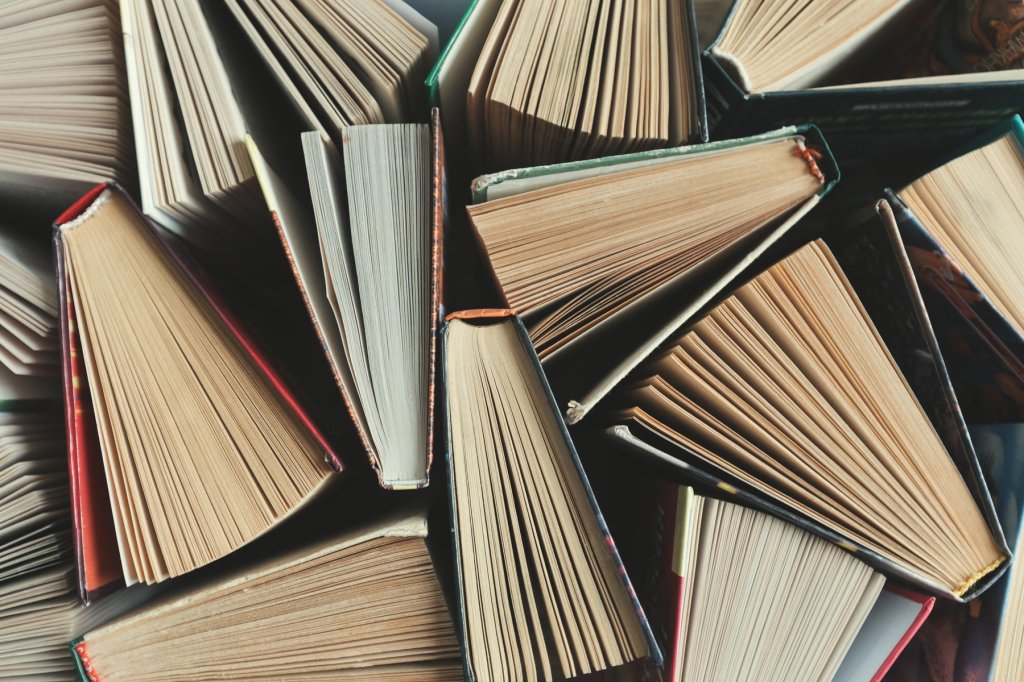
I have kept my possessions fairly minimal: a couple of undies, some of my favourite t-shirts, budgy smugglers, and a toothbrush. One thing however, (to the delight of my mother) I did not compromise on was books – I’m taking 8 of them with me.
The criteria I used in selecting these books is best explained by the poet and playwright Oscar Wilde:
If one cannot enjoy reading a book over and over again, there is no use in reading it at all
These books have been selected as I can read them over and over again; with each re-read producing another nugget of intellect. While I’m on the road, I have the perfect opportunity to take the time to study these works, distil the wisdom of their authors and allow the space to reflect on their ideas, integrating them with my character.
So without further ado, here are: The 8 Books I’m Travelling With and Why.
Version 1: The Concise One
1. Mastery by Robert Greene
A deep dive into actualising our individuality, fulfilling our Life’s Task and achieving Mastery.
2. The Four Agreements by Don Miguel Ruiz
Four commitments to living a purposeful, significant and fulfilling life.
3. How To Eat, Move and Be Healthy by Paul Chek
The Bible of Health and Wellness written by the “Godfather of Wellness”.
4. Conscious Coaching by Brett Bartholomew
‘The Art and Science of Building Buy In’, reads the subtitle – a strength and conditioning coaches how-to manual.
5. The War of Art by Steven Pressfield
A commentary on overcoming creative obstacles and producing significant works of art.
6. Perennial Seller by Ryan Holiday
Making and marketing the everlasting classics and a breakdown of how to do so.
7. The Concise 48 Laws of Power by Robert Greene
A ruthless analysis on advancing your cause in the modern world and exploiting power (the concise version).
8. Meditations by Marcus Aurelius
The Book on stoicism – timeless philosophy with practical takeaways and an application to our day to day.
The Intermission
I would like to take a pause here for all those still with me.
For those short on time, Version 1: The Concise One, finishes here. You are welcome to skip to the conclusion for further reflections, otherwise, I have been grateful for your company.
And for those who are game, my extended breakdowns and reflections continue in Version 2: The Extended One.
Now, back to the show.
Version 2: The Extended One
1. Mastery by Robert Greene
This book is my current read and it has been incredibly timely during the COVID-19 pandemic. The premise of the book is that each of us – given we are genetically unique – has within us an innate purpose to our individuality and actualising this, is a process in which Greene describes, as fulfilling ones Life’s Task and attaining Mastery.
Over the last few months, worlds have been flipped upside down: the loss of jobs and income, social distancing, lockdown procedures and having to isolate from loved ones. However, the crisis has given many of us the ability to distance ourselves from our regular routines, reassess them and consider whether what we are doing, is in alignment with our Life’s Task.
Greene’s, Mastery provides the roadmap for this and it has come to me during a time where I am willing to take a deep dive towards actualising and exploring my uniqueness and individual purpose.
2. The Four Agreements by Don Miguel Ruiz
This one has been on my read list for a while – not that I have a read list; I guess it just sounds highly sophisticated to mention one… Podcasters Aubrey Marcus, Kyle Kingsbury, Scott McGee and many others have mentioned the influence this book has had on their personal lives, and I would be remiss not to dabble in the lessons inherit within this text.
The Four Agreements are: Be impeccable with your word; Don’t take anything personally; Don’t make assumptions; and Always do your best. The principles have been adopted from Toltec wisdom; a path to happiness and purpose, that centres on distilling negative though patterns and limiting beliefs.
Just reading these agreements on face value provides enough substance to contemplate and reflect on alone, and it seems inevitable that after digging through the pages, more profound insights will be forthcoming.
3. How To Eat, Move and Be Healthy by Paul Chek
The Bible of Health and Wellness. Paul Chek is a persona who has pioneered concepts well before the industry has caught on and simplified them for the masses to consume.
I first heard Paul Chek on a MindPump Podcast while hiking in Greece; the ascent overlooking a quaint fishing village in the early hours of the morning. As my breath deepened under the physical strain, as did my understanding of health and wellness, as Chek introduced concepts to mull over to the rise of the sun.
This is the only book of the health and wellness genre on this list, as generally, I find these reads difficult to immerse myself in. However, Chek’s (also known as the “Godfather of Wellness”) insights, coupled with an authentic experience as a practitioner and athlete, ensures the wisdom being communicated is accurate and actionable.
4. Conscious Coaching by Brett Bartholomew
I became aware of Brett Bartholomew in 2017, appearing on the Body of Knowledge Podcast with Andy Galpin and Kenny Kane. The conversation was riveting, as the trio discussed conscious coaching and Brett’s philosophy – that is athlete centred and focused on building buy-in.
In Brett’s model – conscious coaching – communication, psychology and trust in relationships is paramount, something which resonates deeply with my own coaching philosophy. Halfway through the dynamic conversation, I was convinced; I would source and study Brett’s book.
Three years later, I am a strength and conditioning coach and this temporary break from the profession allows me the distance and time to engage fully with the breadth of knowledge presented in this book. I intend to return to coaching, a more conscious and educated trainer, with Brett’s book as a guide to do so.
5. The War of Art by Steven Pressfield
Steven Pressfield’s, The War of Art, was mentioned by another author on this list – Ryan Holiday – as one of his favourite reads from Pressfield. Being an avid reader of Holiday’s, I had no hesitation purchasing The War of Art and adding it to this list as a late edition.
As I began to delve into Pressfield’s work, I realised that this was far more than just a bestselling authors recommendation – the book commentates on the discipline required to achieve a creative labour – something I have personally commenced experimenting with.
With this lifestyle comes the freedom to dictate my own schedule, with reading a writing becoming a cornerstone of my focus. Pressfield’s book will uncover an understanding of how to push past creative obstacles in my writing, which are inevitable, regardless of the circumstance I may find myself in.
Reading and learning from this book is a commitment to disciplined practice, just as writing and producing creative pieces is. This is an investment in my future as a creative, with the rewards, as Pressfield deduces, ripened through continual labour.
6. Perennial Seller by Ryan Holiday
There’s that name again: Ryan Holiday. During this ‘holding’ period, I have read more books from Ryan Holiday than any other author. I find Ryan’s books to be practical and profound, most evident in his distillations of stoic philosophy where he translates 2000 year old universal principles into wisdom with applications to our everyday adversities.
In Perennial Seller, Holiday breaks down the monumental works of art, the timeless classics, and the perpetual prizes – or the Perennial Sellers, as Holiday marks them. He outlines the formulas for making and marketing works that last, and in some ways, educating the reader on fashioning a creative legacy.
In this respect, we are all capable of producing something timeless. This fact stirs a motivation within me and regardless of the product, I know I will learn much about myself in the process, collaborating with the formulas introduced in Perennial Seller.
7. The Concise 48 Laws of Power by Robert Greene
Originally, this article was: The 7 Books I’m Travelling With and Why, however, a last minute addition to this was Greene’s breakout book on the 48 Laws of Power – the concise version anyway. Something within compelled me to dart back inside, adding this book to my already expansive collection – perhaps an intuition guiding me to some deeper learnings.
A few years prior, I had purchased the book from Dymocks after hearing of Greene’s infamous 48 Laws of Power. At the time, the thought of delving deep into the dynamics of power was rather intimidating and hence, the concise version felt a more appropriate selection. Regardless, I had not been compelled to pick it until that morning.
I can only speculate as to why this book has called to me now; perhaps it is time I woke up to the harsh realisation that there is a dominance hierarchy; that the world is not predicated on kindness, but on power, and the ones who have realised this, are the ones who are effectively able to advance their cause. Perhaps it is my turn.
Synthesising these laws with my own understanding will be challenging, but I feel it is up to me to integrate these in a productive and unselfish manner. May the indoctrination begin.
8. Meditations by Marcus Aurelius
Once again, Ryan Holiday appears in this list; this time being the individual who introduced me to stoicism. For context, the Daily Stoic defines stoicism as: “philosophy designed to make us more resilient, happier, more virtuous and more wise–and as a result, better people, better parents and better professionals.”
This is an alluring philosophy for most of us; and for me it provides me with a framework for responding to adversity. One of my favourite passages in Meditations:
External things are not the problem. It is your assessment of them, which you can erase right now.
Meditations is perhaps the most famous of the stoic works, and since my introduction, I have kept a copy in the glove box of my car, to withdraw and ponder on the endless accounts of wisdom from the ancient Roman emperor. Usually accompanying me on a lonesome hike; a lengthy drive; or a quaint café, I would pull out the book, opening it to a random page, where without fail, I would come across a passage worth meditating on.
This time, I intend to read it front to back, absorbing and noting the particularly profound insights and to understand a grander perspective to the text as a whole. In my previous encounters, one line sparked endless insights – I’m captivated at what the whole text may do.
The Conclusion
As I have mentioned, these 8 books are intended to be revisited numerous times, given the profundity of knowledge communicated through the pages. There are timeless elements of wisdom presented expertly and uniquely by each author and hence, these works are not merely to be read; they are to be studied.
I cannot expect to absorb these works from a simple read through – I learned rather quickly that reading my notes prior to an exam did not guarantee my ability to regurgitate those facts during an exam.
So why should these books be any different?
In order to learn from books, we must study them; and in order to study, we need to reflect, internalise and experiment with the range of ideas presented in the texts.
Because, if all I can say at the end of this journey is that I have read these 8 books, then I have failed.
Only when I have internalised the wisdom inherit in these texts; only when I have truly engaged and experimented with their ideas; only then have I actualised my intentions.
That is when I can say, I have not only read these books, but I have learned from them.
Books are, after all, an excellent teacher.
 CHANGE IS THE POINT