Observing Duality
I. Opposites
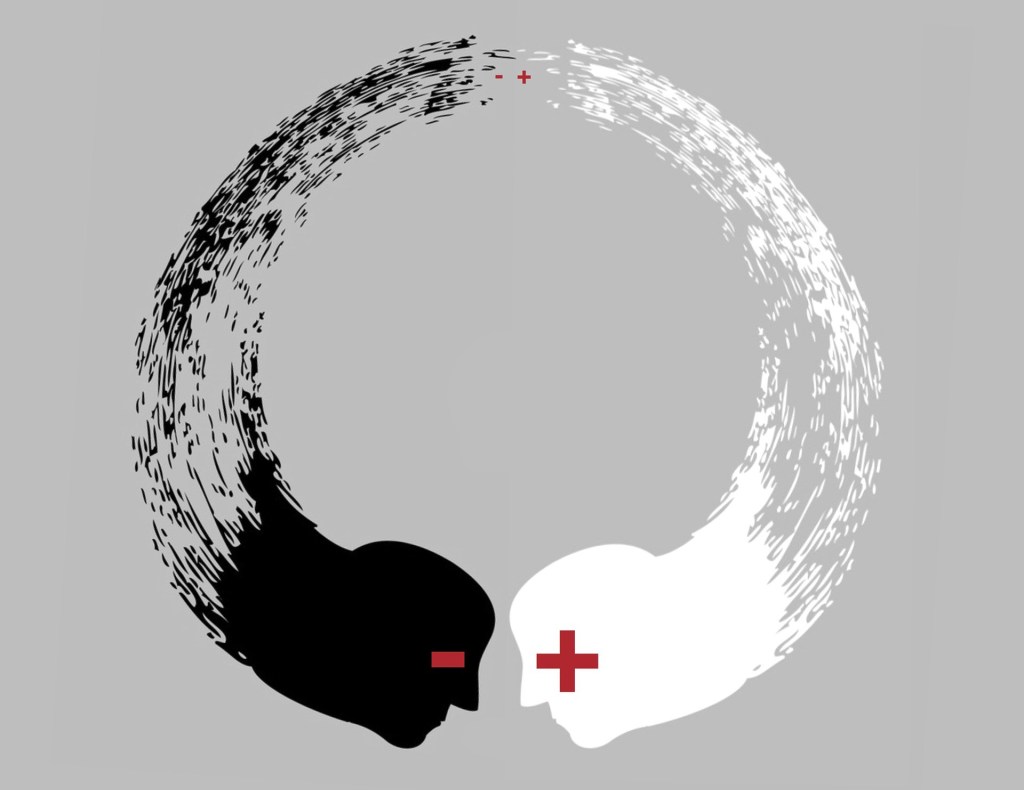
The Thinker and The Doer are archetypically represented as opposites.
The Thinker is the constant reflector and the measured articulator; rational and philosophically inclined. Usually, they are introverted and derive their energy from searching within themselves.
The Doer is the intuitive and impulsive; the supreme realist who pours energy into their tasks without as much as a second guess. They are not concerned with the possibilities of the infinite universe (or at least, not outwardly so), and serve their purpose and the present moment through action.
Each of us can identify the Thinker and the Doer within, and perhaps we discover that we are more inclined towards a particular archetype.
Recognising this allows us to play to our strengths, seek solutions to our problems and enact meaningful and substantial contributions to the world.
But is this always so?
II. Introduction
This series was born from thinking, observing and reflecting.
It is clear I am inclined to the Thinker, however, I have observed and experienced the value of the Doer.
Through my experiences, I have learned that the solution to my problems; the gateway to enriching experiences is not always by leaning in the direction of my inclinations, but by reversing them altogether.
In light of this, my aim through this series is to provide a brief overview of the Thinker and the Doer – the traits of each, the strengths and the weaknesses – by drawing on my experiences, references from books, and by citing characters throughout history.
I discuss how constantly leaning into our inclinations and remaining within the confines of these archetypal identities may in fact be inhibiting us from experiencing a vital aspect of our humanity.
Finally, I propose that unifying these dualities – the Thinker and the Doer – allows us to engage with a deeper, richer human experience.
III. Reflect
Joseph Campbell of the Hero’s Journey states:
“The cave you fear to enter holds the treasure you seek”.
Considering this, would you be willing to move away from your inclinations; to go against your natural tendency to think or to do, and enter the cave of your direct adversary?
And yet, on further investigation, are the Thinker and the Doer even directly opposed…?
Or does becoming aware of this duality within ourselves – entering the cave – allow us to mature beyond the confines of these opposites and into the fluidity and presence of wholesome experience?
Read the rest of this series as you desire, but ultimately, you decide.
 CHANGE IS THE POINT