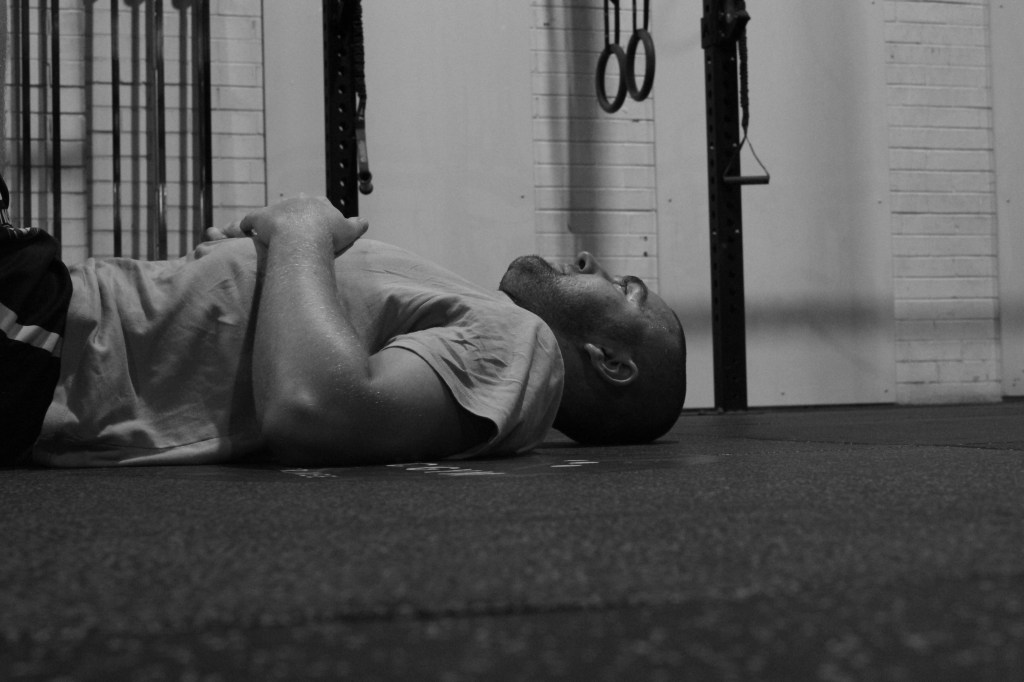
I got asked about cueing the other day and it’s got me thinking about thinking. “What are you cueing yourself when you are doing that?… What are you thinking about?” I am performing a Snatch. It’s a highly complex olympic weightlifting movement that requires the player to hoist the bar from the floor into a squatted overhead position in one swift motion, before locking the hips out and standing to demonstrate control and complete the rep.
The question stumps me. It feels odd being on the receiving end of it. Usually I am the one making this exact inquiry to my clients. My thinking goes that if I can get an insight into what the client is thinking, then I can get an insight into their capacity to make improvements in their training.
In my experience, not enough of us think enough when we train. Physical activity for many is largely an un-conscious act. We don’t consider the intricacies of how we are exercising; or pay close attention to our thoughts during intense efforts; or give ourselves the space to reflect and analyse following. And in my experience if we don’t think, we dramatically reduce our potential to improve.
Most have discovered a perfectly viable solution to this: outsourcing our thinking. To a coach, a teacher, a mobile phone application or a virtual trainer. These services work and are in constant demand, however they usually miss one fundamental component of progress: fostering the clients ability to think for themselves.
Using the four stages of competence model popularised in psychology, many sit at the bottom of the pyramid in unconscious incompetence. To move up the competence hierarchy, one needs a shift in their awareness; they need to start to think; to recognise where they are incompetent, and intentionally and deliberately address this. The two middle phases are the training phases; of continual refinement, reflection and re-orientation.
There is a final layer however, and it circles right back to my clients’ question: “What are you cueing yourself when you are doing that?… What are you thinking about?”. Is it keeping the bar close? Getting my elbows high? Punching a hole through the ceiling?
As of this moment, I have spent years thinking about the snatch. I’ve watched repetition after repetition after repetition; my own and my clients. I’ve coached and been coached. I’ve become marginally apt at identifying patterns allowing me to make adjustments to the lift when needed. But more importantly, I have thought so much about the movement that when I’m doing the movement, I’m not thinking, I’m feeling; feeling a tension through my legs; a snappiness with my turnover; a stability in my squat. These sensations are the cues I pay attention too.
I don’t arrive here first without thinking and developing conscious (in)competence; and continuing to seek feedback and reflect on where I could have executed better. It is where we all must start assuming becoming competent is something worth attaining. Often I’ll encourage people to film themselves train so they may later assess their technique or bring their focus to the thoughts they experience during a long, slow grind. Hopefully, in time they don’t need me to do this for them; only to remind them, until they have learned to think and do so themselves.
This article was published in the Sydney Observer’s 2025 May Edition
https://sydneyobserver.com.au/wp-content/uploads/2025/05/Observer0525.pdf
 CHANGE IS THE POINT